
It’s Getting Harder to Run a Small Business in 2026 — Here’s Where to Find the Savings
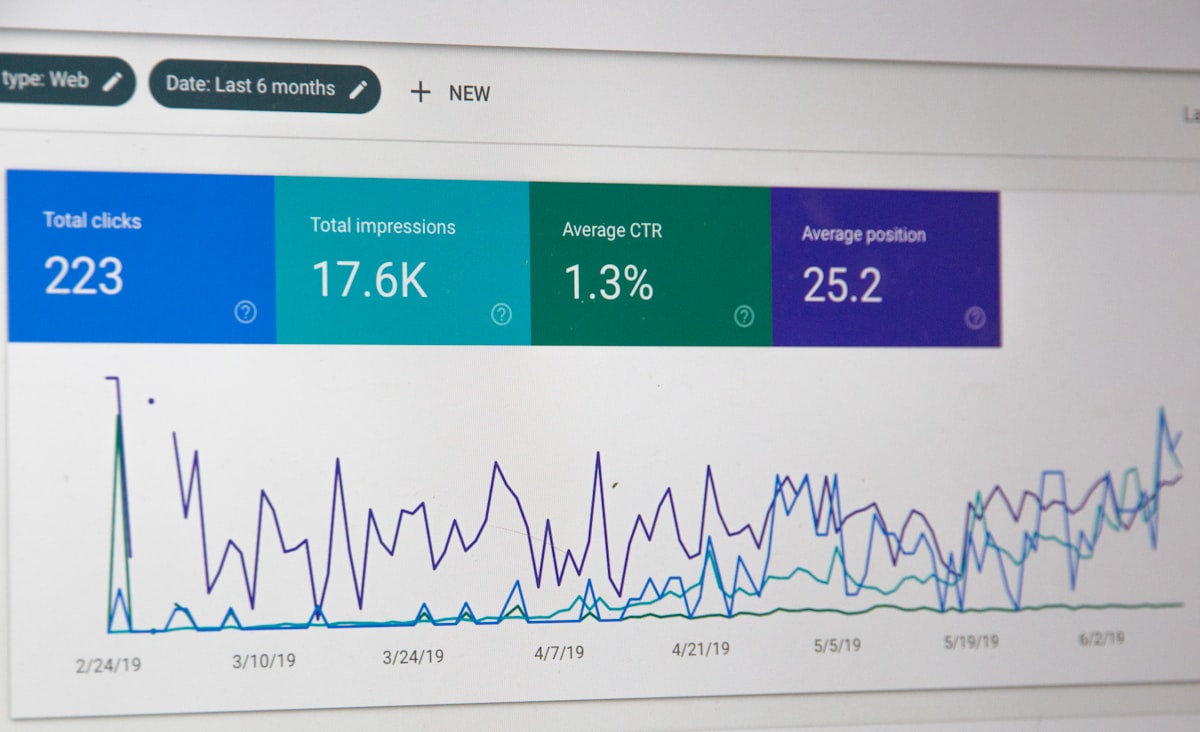
Energy up 25%. Wages up 3.75%. Interest rates at levels not seen in a decade. Consumer spending squeezed. If 2026 feels harder than any year in recent memory for small business owners, that’s because the data backs it up. According to a survey of Australian SMEs, 72% say rising costs are the biggest barrier to growth — and 64% reported lower profits over the past year. This is not a cash flow problem you can trade your way out of. It requires a hard look at every fixed cost in your business.
This post is about one category of fixed costs that most small business owners underestimate: their communications infrastructure. It is not the biggest line item in your budget. But it is one of the most addressable — and the savings are recurring, every single month.
The 2026 Cost Environment in Plain Terms
Let’s be direct about what small business owners are dealing with right now:
- Energy costs — Electricity tariffs are up 10–20% for businesses, and fuel has risen 25–40% following the oil price spike earlier this year. For any business with a fleet, a commercial kitchen, or energy-intensive equipment, this is a serious hit.
- Wages — The Fair Work Commission’s 3.75% minimum wage increase flows through to award wages across the board. For a team of 10, that can add $20,000 to $50,000 to your annual wage bill without any change in headcount.
- Interest rates — The RBA cash rate sits at 3.85%. Business loans are priced at 7–14% depending on whether they are secured. If you have debt in the business, servicing it is meaningfully more expensive than it was two years ago.
- Weak consumer demand — Customers are spending less on discretionary items. Revenue is flat or falling for many businesses in retail, hospitality and professional services, while costs move in only one direction.
You cannot control most of these. What you can control is your fixed cost base — and that means auditing every recurring expense to ask: are we getting value here, and is there a more efficient way?
The Phone Bill Nobody Audits
Most small businesses last looked seriously at their phone system when they set it up — which for many was five, ten, or fifteen years ago. Since then, they have been paying line rental, call charges and maintenance fees on infrastructure that has not changed, while the technology has moved on dramatically.
Here is what that looks like in practice:
- Monthly line rental on legacy ISDN or analogue circuits that could be replaced with SIP trunking at a fraction of the cost
- Per-minute call charges to mobiles when unlimited call plans are available for a flat monthly fee
- Maintenance contracts on ageing PBX hardware at rates that made sense when the system was new, but no longer reflect the market
- Emergency call-out fees for faults that could be prevented by a scheduled maintenance plan
- Paying for more capacity than you actually use — line counts set at peak levels from years ago
A proper audit of your current phone system costs — what you pay, what you use, and what you actually need — is often the first step to finding meaningful savings.
What Switching to VoIP Actually Saves
Businesses that switch from traditional phone systems to VoIP typically save 50–75% on their monthly call costs. That is not a marketing figure — it reflects the genuine difference between per-minute PSTN call pricing and flat-rate VoIP plans.
To put it in concrete terms: a five-person office making regular calls to mobiles could be spending $700 or more per month on call charges under a basic plan. A VoIP system with unlimited national and mobile calls included could bring that to $175 per month. That is $6,300 per year, recurring, without any reduction in service quality.
Beyond call costs, switching to a cloud-hosted VoIP system removes:
- The cost of maintaining on-premises PBX hardware (parts, technician visits, firmware updates)
- ISDN and PSTN line rental — replaced by a single SIP trunk or cloud service
- The cost of scaling up: adding a new staff member means adding a software extension, not buying hardware
- The risk of a large unplanned expense when ageing hardware finally fails
If you are in Brisbane or South East Queensland, A&B Communications can assess your current setup and provide a clear comparison of what you are paying now versus what a VoIP or cloud phone system would cost. There is no obligation and no sales pitch — just a straightforward numbers comparison.
The Hidden Cost of an Unreliable Phone System
Cost savings are one side of the equation. The other is cost avoidance — and nowhere is this more relevant than with an ageing phone system that is starting to show its age.
When your phone system goes down during business hours, every missed call is a missed opportunity. For a business that depends on inbound enquiries — a trade, a medical practice, a real estate agency — even a few hours of downtime can cost more than a year’s worth of maintenance fees.
The pattern we see repeatedly is this: a business defers maintenance to save money in the short term, the system develops a fault, and the emergency call-out costs three to five times what a preventative maintenance visit would have. In a year when every dollar counts, that is exactly the kind of unplanned expense that derails a tight budget.
A structured maintenance plan converts unpredictable emergency costs into a known fixed monthly amount — and it keeps the system running reliably in the process. For businesses on a tight budget, that predictability is genuinely valuable.
Repair vs Replace: When Keeping Your Existing System Makes Financial Sense
Not every business needs to replace their phone system to reduce costs. If your existing PBX is running well and the primary issue is call costs, adding SIP trunking to your current system — replacing expensive ISDN lines with internet-based calling — can deliver significant savings without the capital outlay of a new system.
A&B Communications services NEC, Panasonic, Avaya, iPECS and Alcatel systems. In many cases, an older system can be maintained, reprogrammed and extended at a fraction of the cost of replacement — particularly when the alternative is a full system purchase at a time when capital is tight.
The honest advice is this: replacement is not always the right answer. We will tell you when it is and when it is not, because the right answer is whichever costs you less over the next three to five years — not whichever generates more revenue for us.
Moving Office? Don’t Let the Phone Bill Blow the Budget
Office relocations are a cost centre that frequently runs over budget, and the phone and data infrastructure is one of the most common reasons why. Rushed cabling by the cheapest quote, incorrect provisioning of SIP trunks, or a system that is not properly tested before go-live — all of these create costs that appear after the move is supposed to be finished.
Engaging A&B Communications for phone system relocation and structured data cabling at your new premises means one point of contact, a fixed scope, and a go-live that is tested before your team walks in on day one. That eliminates the category of costs that comes from fixing problems after the fact.
A Practical Starting Point
If you are looking to reduce fixed costs in your business, here is a practical starting point for your phone and communications infrastructure:
- Pull out your last three phone bills. Add up line rental, call charges and any maintenance fees. That is your baseline.
- Check whether you are still paying for ISDN or PSTN lines. These should have been replaced — if they have not, you are likely paying a significant premium for technology that is now obsolete.
- Ask when your phone system was last serviced. If the answer is “I’m not sure” or “years ago,” a health check is worth doing before a fault forces your hand.
- Consider whether your call volume justifies unlimited plan pricing. For most businesses making regular calls to mobiles, a flat-rate plan is significantly cheaper than per-minute charging.
- Get a quote for a VoIP alternative — even if you are not ready to switch, knowing the numbers gives you leverage and perspective.
A&B Communications provides free assessments for Brisbane and South East Queensland businesses. We come to your site, review your current setup and give you a straight comparison of your options — including what it would cost to stay with your existing system versus moving to something more cost-efficient. No pressure, just numbers.